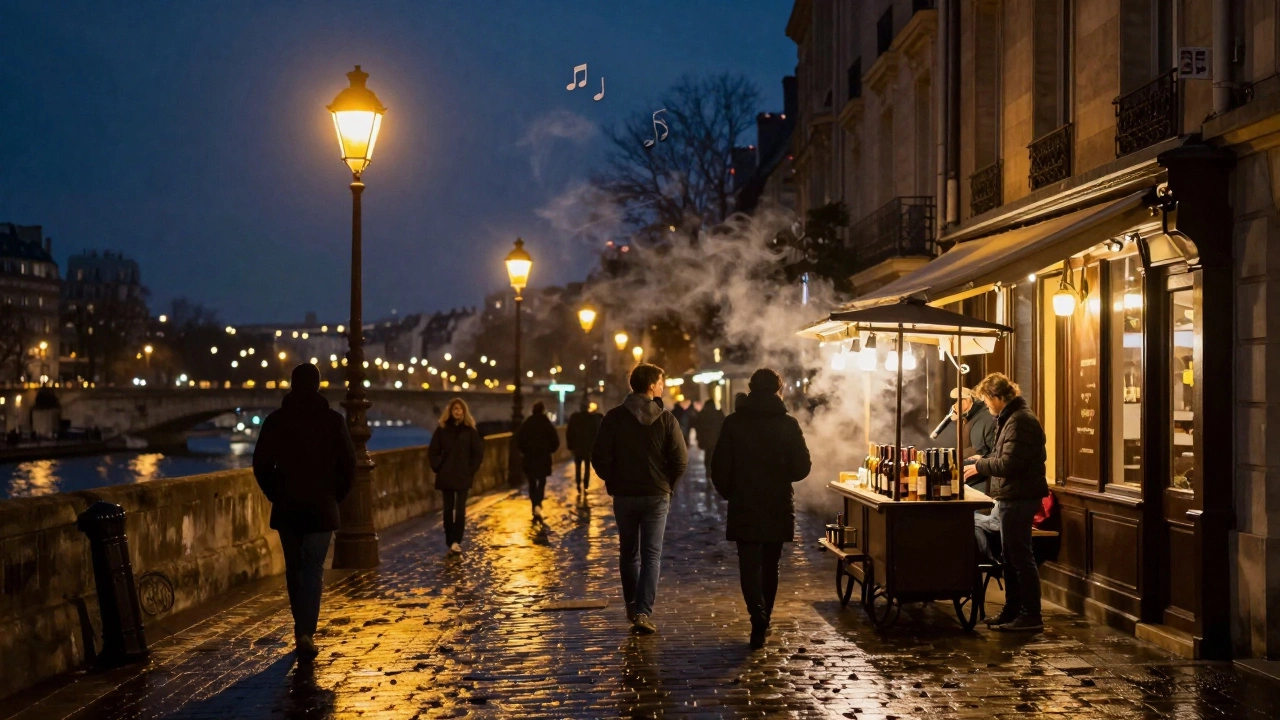
Paris doesn’t sleep. Not really. By 10 p.m., the city is just waking up. The lights along the Seine flicker on, jazz spills from basement clubs in Le Marais, and the scent of warm chestnuts mixes with perfume and cigarette smoke on the sidewalk. This isn’t the Paris of postcards - this is the Paris that hums after dark, where every arrondissement has its own rhythm, its own crowd, its own kind of magic. If you’re looking for nightlife that feels alive, unpredictable, and deeply local, you’ve come to the right place.
Some visitors ask about escort pa services, but that’s not what most people come for. The real draw? The energy. The way a bar in the 11th feels different from a rooftop lounge in the 16th. The way a late-night bistro in Montmartre serves wine by the carafe while a DJ spins vinyl in a hidden cellar under the Canal Saint-Martin. You don’t need a guidebook. You just need to walk, listen, and let the city lead you.
Where the locals go after midnight
The 8th arrondissement is polished, elegant, and often overlooked after dark. Think Champs-Élysées, but quieter. The real scene here isn’t in the big-name clubs - it’s in the tiny wine bars tucked between luxury boutiques. Places like Le Comptoir du Relais or Bar à Vin stay open until 3 a.m., serving natural wines and charcuterie to a crowd of artists, translators, and retired actors. It’s not flashy. It’s not loud. But it’s real. And if you’re looking for something authentic, this is where you’ll find it.
For something louder, head to the 10th or 11th. The Canal Saint-Martin area is packed with indie bars, live music venues, and pop-up dance floors. You might stumble into a reggae night at La Belle Hortense, or catch a punk band playing in a converted warehouse. The crowd here is young, diverse, and uninterested in pretense. No velvet ropes. No cover charges before midnight. Just good music and a lot of laughter.
Themed nights and hidden spots
Paris thrives on surprise. Every week, a new pop-up appears - a silent disco in a former church, a cocktail tasting in a bookshop, a drag show in a 1920s-style speakeasy. The best way to find them? Ask someone who works in a bar. Not a tourist guide. Not a hotel concierge. A bartender who’s been there five years. They’ll point you to the back room, the alleyway entrance, the unmarked door.
One of the most talked-about spots right now is Le Baron in the 16th - but not for the reason you think. It’s not the celebrity sightings. It’s the fact that they change the music every hour. One night it’s French house, the next it’s Afrobeat, then experimental techno. The crowd adapts. So should you.
Don’t miss the monthly Brunch & Beats at La Chambre aux Oiseaux in the 13th. It starts at 2 p.m., ends at 2 a.m., and no one leaves until the last track fades. People come in suits, in pajamas, in raincoats. No one cares. It’s just music, coffee, and connection.
What to wear - and what not to
Parisians don’t dress for the occasion. They dress for themselves. You don’t need designer labels. You don’t need heels or a blazer. But you do need to look like you tried. A clean pair of jeans, a well-fitted jacket, a good pair of shoes - that’s the uniform. No flip-flops. No baseball caps. No fanny packs. If you show up looking like you just got off a plane, you’ll be treated like you’re still on one.
Men: Skip the polo shirts. Swap them for a simple turtleneck or a linen button-down. Women: Skip the glitter. Go for a little red lip, a silk scarf, or a leather belt. It’s not about being fancy. It’s about being intentional.
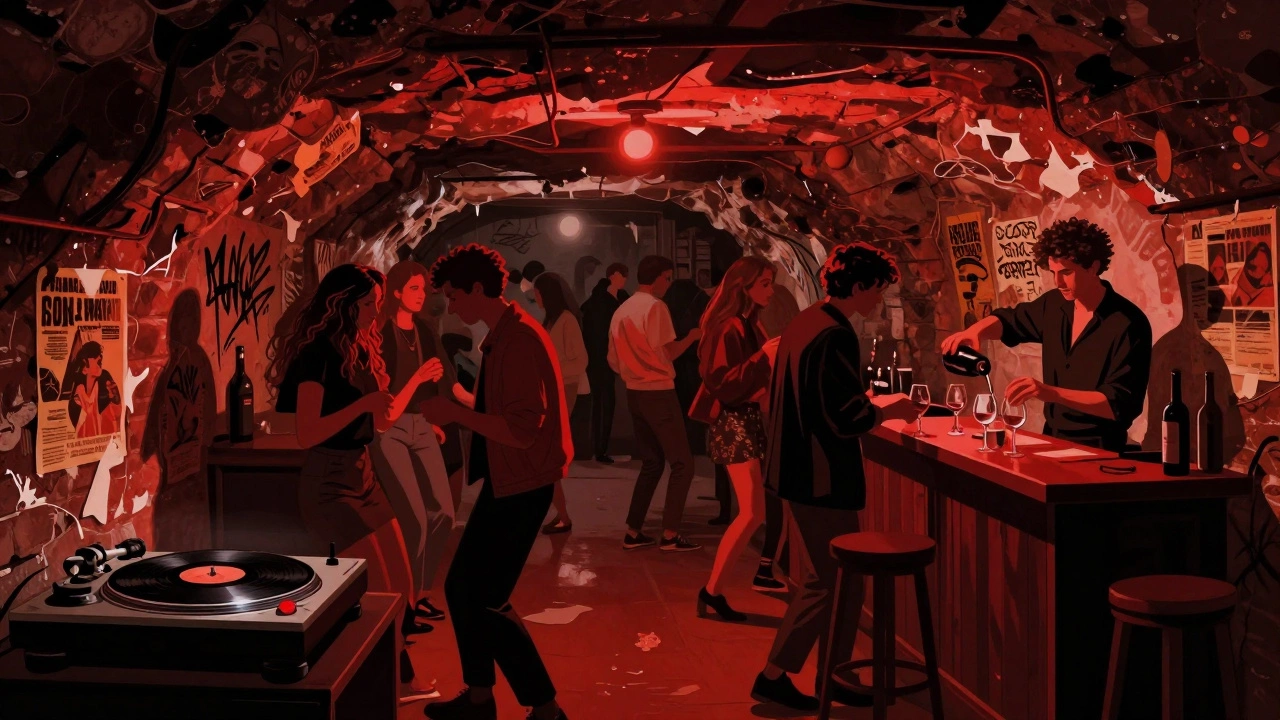
Drinks, not just cocktails
Paris is not a cocktail city. It’s a wine city. A beer city. A café-au-lait city. You can get a perfectly made negroni - yes, of course. But most people are drinking natural wine from the Loire, a crisp pilsner from a local microbrewery, or a simple glass of red from the corner bistro. If you’re unsure, ask: "Qu’est-ce que vous buvez ici?" (What do you drink here?)
Try La Cave des Abbesses in Montmartre. They pour wine by the glass from small producers you’ve never heard of. The owner knows every vineyard owner by name. He’ll tell you why the 2021 Gamay from the Jura tastes like wet stones and blackberries. You don’t need to know wine. You just need to listen.
When to go - and when to skip
Weekends are crowded. That’s obvious. But the real secret? The best nights are Tuesday and Wednesday. Clubs are quieter. Bars have more space. The energy is more relaxed. You’ll actually get to talk to people. You won’t be shoulder-to-shoulder with three other tourists trying to order a drink.
Avoid Friday nights in the 1st or 2nd arrondissements unless you like long lines and overpriced drinks. The tourist traps there are thick. Stick to the edges. The 14th. The 19th. The 20th. These are the neighborhoods where the real nightlife lives - not the ones that show up on Instagram.
What to do after 4 a.m.
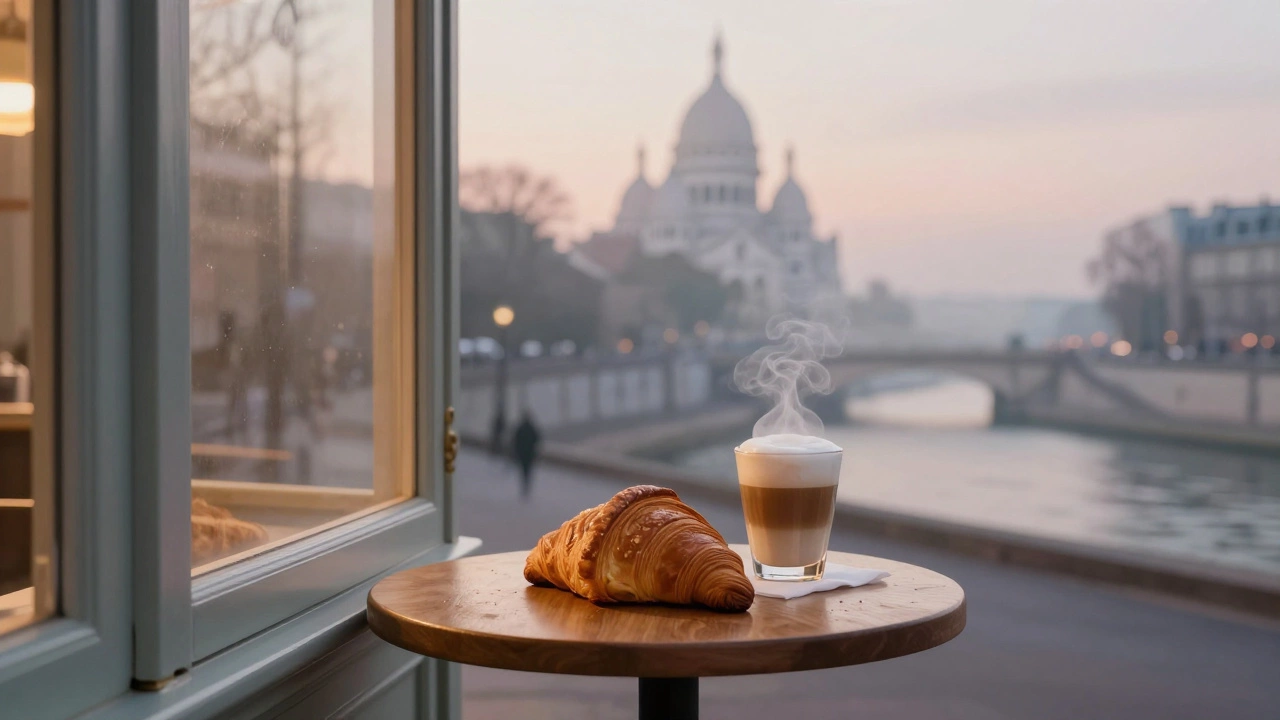
Paris doesn’t end at 3 a.m. It just shifts. By 4 a.m., the clubs close. But the bakeries open. Walk to Boulangerie Utopie in the 10th. Get a warm croissant, a café crème, and sit outside. The city is quiet now. The streets are empty. The only sounds are footsteps, distant sirens, and the clink of a spoon against a ceramic cup. This is the moment Paris feels like yours.
Some people head to the Seine for a midnight swim. Others sit on the steps of Sacré-Cœur and watch the sunrise over the city. A few still wander into the Marché aux Puces de Saint-Ouen, the flea market that never sleeps. You’ll find vintage coats, old vinyl, and a guy selling handmade incense from Marrakech. It’s not a tourist attraction. It’s just life, continuing.
Why this matters - beyond the nightlife
Paris at night isn’t just about partying. It’s about belonging. It’s about finding your rhythm in a city that moves at its own pace. You don’t have to be French. You don’t have to speak perfect French. You just have to be present. Sit at the same bar for three nights in a row. Say hello to the bartender. Learn the name of the dog that sleeps under the table. That’s how you become part of it.
That’s why people come back. Not for the Eiffel Tower. Not for the Louvre. But for the way a stranger in the 12th will hand you a spare cigarette and say, "Tu as l’air perdu. Tu veux un verre?" (You look lost. Want a drink?)
And if you’re looking for something more personal - maybe a companion for the evening - there are services available. Some call them escorte girl paris 8. Others use the term escorts à paris. They exist. But they’re not the point. The point is the city itself. The people. The noise. The silence. The way it all comes together when you stop looking for a checklist and start living the moment.
Is Paris nightlife safe for solo travelers?
Yes, but like any major city, stay aware. Stick to well-lit streets after midnight. Avoid empty metro stations late at night. Most neighborhoods are safe, especially around popular nightlife zones. The 1st, 4th, 11th, and 18th are generally fine. Trust your gut. If a place feels off, walk away. Parisians are used to tourists and will help if you ask politely.
What’s the best time of year for nightlife in Paris?
Late spring (May-June) and early fall (September-October) are ideal. The weather is mild, the crowds are thinner, and the energy is high. Summer (July-August) is quiet - many locals leave the city. Winter (November-February) is moody and intimate, with cozy bars and fewer tourists. Avoid August unless you want empty streets and closed venues.
Do I need to make reservations for clubs in Paris?
Most small bars and jazz clubs don’t take reservations. Big clubs like Le Baron or Concrete might require one on weekends, especially if you’re coming in a group. For smaller venues, just show up. The line outside a popular spot is often a good sign. If it’s packed, it’s worth waiting for.
Can I use my credit card everywhere in Paris nightlife spots?
Many small bars and independent venues still prefer cash. Always carry at least €40-50 in euros. Larger clubs and tourist-heavy spots accept cards, but don’t assume it. ATMs are everywhere, but avoid airport or train station machines - they charge high fees. Use a bank ATM instead.
Are there any dress codes I should know about?
Most places don’t have strict dress codes, but they do have unspoken rules. No athletic wear, flip-flops, or beachwear. No logos on shirts. No oversized hoodies. A clean, simple outfit works best. If you’re unsure, lean toward smart casual. It’s better to be slightly overdressed than underdressed. Some upscale lounges might ask for closed-toe shoes - but they’ll rarely say it outright.
What to do next
Start tonight. Walk out your door. Pick a direction. Don’t plan. Don’t check maps. Just follow the sound of music. The first bar you see? Go in. Order something you’ve never tried. Talk to the person next to you. Say "Bonjour" even if you don’t know what to say next. That’s how you find Paris - not by looking for the best club, but by letting yourself get lost.